
Haripriya Rangan teaches geography and environmental sciences at the University of Melbourne. On how acacias reached India, her point of view is from timber to temperance humans sought diverse solutions from plants and thus; Acacias reached India. In discussion with Times Evoke, she traces the international journeys of acacia and eucalyptus trees. A summary is provided in this article.

Plants have complex histories of moving through time. There are the natural modes of movement which include water, wind and seed dispersal via birds and animals. But there is also the intricate involvement of human beings with how plants have travelled the Earth, and one of the best known journeys is the ‘biological expansion of Europe’. This concept was envisioned by the historian Alfred Crosby who outlined how colonising Europeans didn’t just conquer places by force — they also travelled as biological agents, carrying both diseases and other animals with them, like cattle, horses, etc. On the other hand, Europeans were also constantly looking for various valuable plants and other commodities which they could take back home. These encompassed, spices to medicinal herbs and exotic flowering varieties. Thus, seafaring traders, merchants, missionaries, etc., helped these botanical beings move vast distances to Europe. They were planted in monasteries, royal gardens, etc., and studied closely. Later, when commercial uses were found for them, this entire process expanded — maize was brought across from the New World to Europe.
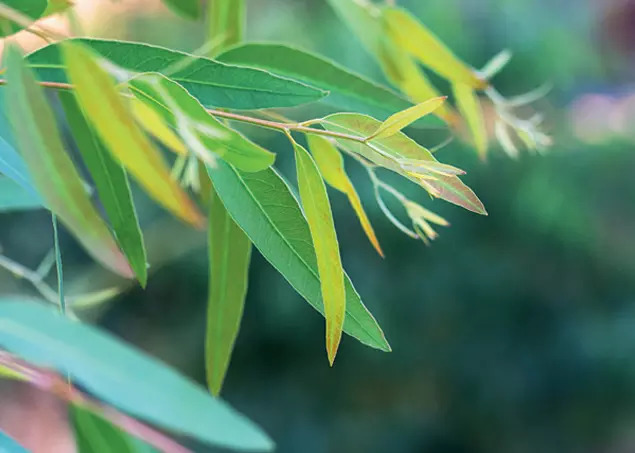
Tomatoes, today an integral part of Italian cooking, were brought to Europe too as were chillies. There was a great deal of interest in moving economically valuable plants from Australia outwards. Eucalyptus and Acacias were two major tree species which Europeans felt were very useful, particularly for economic purposes and land reclamation work — so, there was a very active effort during the 18th century to identify and transport these. In the 18th and 19th centuries, as Australia was getting colonised, a special effort was made to take eucalyptus and acacia species to Europe to grow in dedicated botanical gardens. Then, European powers felt the need to plant these over larger areas. Eucalyptus was brought by the British to India in the early 1800s and planted particularly in the Nilgiris — Ooty was identified as a place Europeans could get land in and become settlers and coffee and tea planters. They realized they needed more wood to provide them fuel and so, they brought acacias across to India for this. In the 19th century, Portuguese foresters, looking at Britain’s industrialization, decided that to grow like that, they needed more timber — eucalyptus and acacias were fast-growing species providing this. So, they imported these seeds, often exchanged by European botanical experts mingling at special conferences. Ferdinand von Mueller,
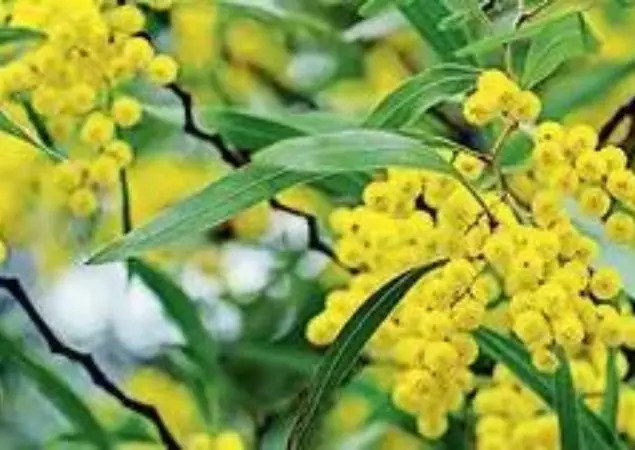
a German who established the Melbourne Botanic Gardens, was a huge promoter of Australian eucalyptus and acacias and would prescribe these widely — thus, these plants began to grow from California to the Mediterranean’s dry climate. William Tait, the son of an English port wine merchant based in Porto, obtained large estates in central Portugal, apparently naming these ‘Nova Australia’ and ‘Nova Tasmania’. There, he grew Eucalyptus and Acacia. Acacia Mearnsii or black wattle was also sought after as its bark produced the darkest tannins, used to cure and colour leather, very valuable for an expanding shoe industry. In India too, black wattle was grown in the Nilgiris for this. Eventually, Portugal became the world’s biggest supplier of eucalyptus wood for the pulp and paper industries, which emerged from these trees. In southern Africa, eucalyptus varieties were planted to stabilise soils facing erosion. in California, promoters of eucalyptus also formed groups like Temperance Societies which often used this to encourage people to stop drinking alcohol. ‘Neo-Australias’ thus spread with these now-iconic varieties. Acacias came from central America to Europe and became the basis of a perfume industry in France — Grasse in southern France cultivated these on a plantation scale. The species has a beautifully fragrant flower. It was found that boiling the flower could help get the essence out. In India, Acacia Farnesiana-based perfume is also produced in Kannauj today. Plants thus represent different things — from capturing power to terra firma, establishing taxes to using their medicinal aid, plants have been valued enough for humans to transport them from one end of the world to the other. It may be noted that there is the Indian context of the ancients and indigenous people of India having learnt and adapted through experience this knowledge to the Ittar industry in Kannauj as is discussed above. Our Ayurvedic systems have also exploited this. It is true that the Chinese and other indigenous systems worldwide have developed their own contexts – Ramdas
Discover more from rasayANix
Subscribe to get the latest posts sent to your email.
 rasayANix