
This is the summary of a discussion that Conservation Biologist K. S. Gopi Sundar had with Srijana Mitra Das of Times Evoke on conducting a study on birdlife in Udaipur. Conservation biologist KS Gopi Sundar is co-chair of the IUCN specialist group on storks, ibis and spoonbills and editor-in-chief of the global journal ‘Waterbirds’.
Dr Sundar and some others recently carried out a study of cities and how these matter for biodiversity. An earlier study done by us had shown how even a bustling megacity like Delhi can sustain incredibly high levels of biodiversity, especially birds, when it lets ponds be — Delhi’s pond diversity levels actually broke global records. Following from there, with Kanishka Mehta, his student from Sukhadia University, Dr Vijay Kohli and Swati Kittur, a study was designed to investigate birdlife in Udaipur, a smaller location than Delhi but a bustling tourist hub and selected for Smart City development work. A framework was designed covering the entire city through sampling and for the first time perhaps in India, surveyed each season to see if bird populations changed with the weather.

ARRIVING IN STYLE: The superb Dalmatian pelican is one of the many migratory species which visit Udaipur, adding to the splendour of its lakes. Photo courtesy: Kanishka Mehta Via: KS Gopi Sundar
The project threw up some fascinating results. It was found that Udaipur had around 208 species of birds, of which about 80 were migratory. According to them; a bird’s niche is described as a range of environmental conditions in which species can thrive, including urban parameters like people, land uses (agriculture, concrete, etc.), tree species, open areas and so on. Combining these, the study could provide numerical estimates of how a species’ niche was doing.

LOTUS STEPS: Pheasant-tailed jacana. Photo courtesy: Kanishka Mehta Via: KS Gopi Sundar
It was also found that few species needed very specialized conditions in Udaipur, suggesting the city could support a diverse bird assemblage. The literature suggested migratory birds would do ‘niche packing’ or squeeze themselves into existing spaces. However, it was found that the exact opposite was happening in Udaipur — migratory species didn’t pack themselves in this manner. Udaipur had enough open spaces to accommodate many species in a season, which birds used in ways that defied the current measuring ability.
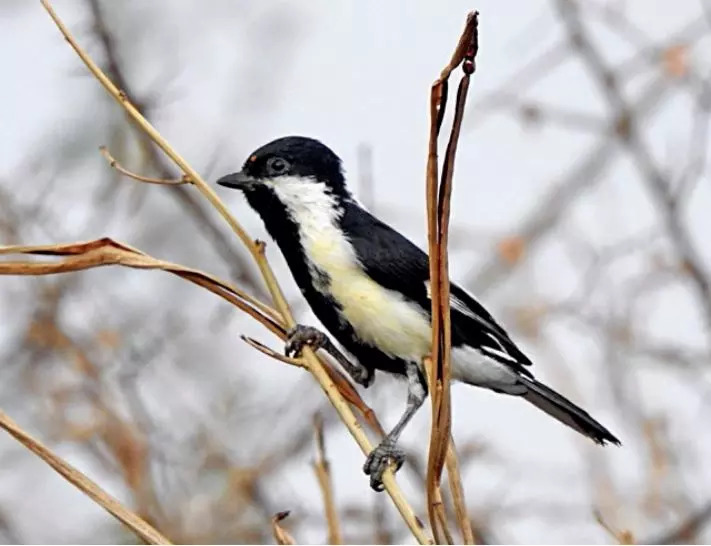
SURPRISE! An urban white-naped tit. Photo courtesy: Kanishka Mehta Via: KS Gopi Sundar
Data was also gathered on whether bird niches varied across seasons. However, it was found practically that all resident species changed their niches every season — clearly, they could adapt to varying resources. There were no large differences in the niches of feeding guilds or groups with similar dietary habits like insectivores, frugivores, etc., implying Udaipur’s layout, with waterbodies, grasslands and limited construction, could preserve a very diverse community.
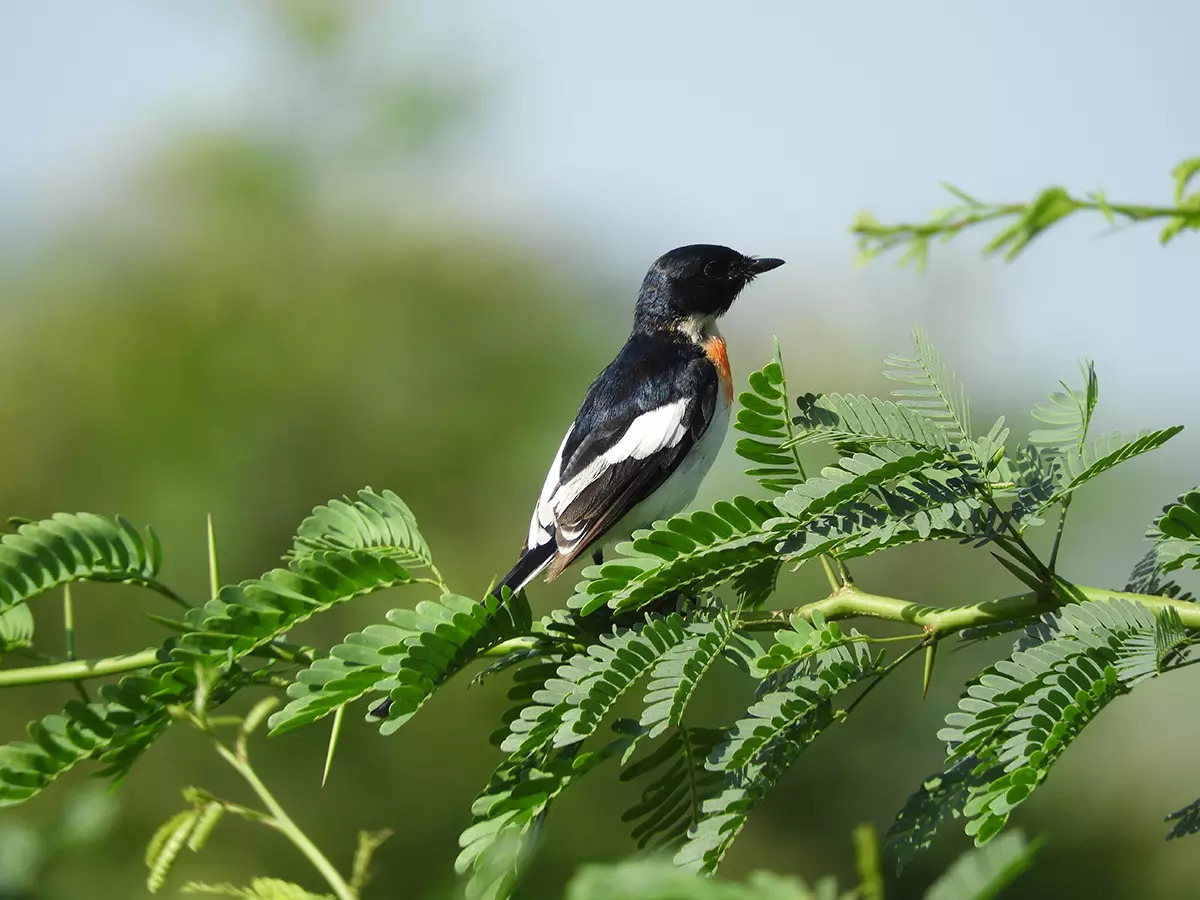
White-Bellied Minivet: A truly rare species everywhere – yet, many locations in Udaipur have breeding pairs of this bird, making the city a rather unique bird habitat. Photo courtesy: Kanishka Mehta Via: KS Gopi Sundar
It was then investigated as to what else was working. Udaipur is nestled between valleys of the Aravallis which have been mostly maintained thanks to multiple court decisions. That helped retain scrubland, woodlands, etc., in the city, supporting birds like the spot-breasted fantail.
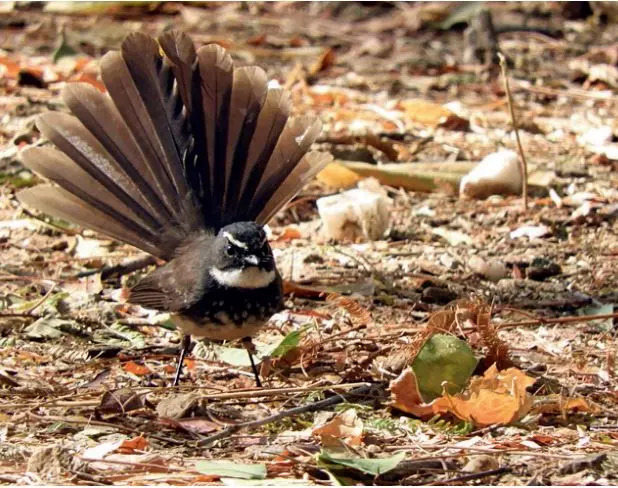
IN SCRUBLAND: Spot-breasted fantail. Photo courtesy: Kanishka Mehta Via: KS Gopi Sundar
The Aravallis, among the least studied ecosystems globally and often considered highly degraded, are not doing so badly on biodiversity. The earlier study in Delhi, at one extreme of the Aravallis, and this study in Udaipur, at the other extreme, showed this. The Aravallis seemed healthy ecologically in cities and so its biodiversity outside urban areas can be imagined.
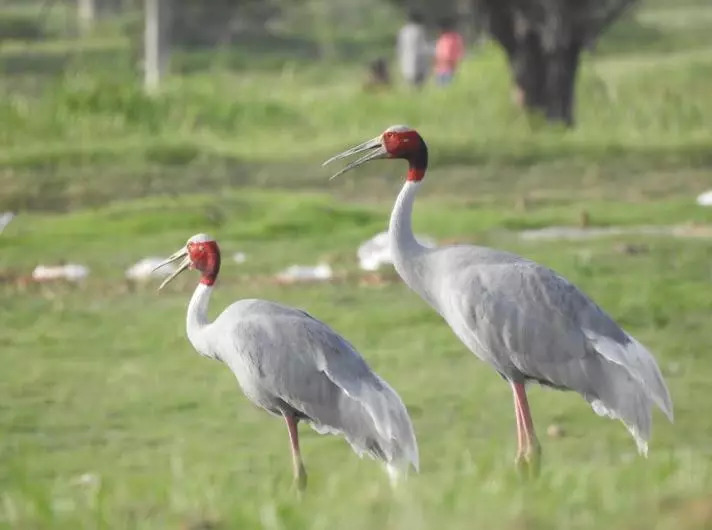
Sarus Crane: These tall, graceful birds point to the importance of retaining wetlands and rice farming, both uncommon in the usually dry Aravallis. A small but significant population is found in Udaipur’s city limits. Photo courtesy: Kanishka Mehta Via: KS Gopi Sundar
This study is thus a note of hope in a generally bleak atmosphere concerning biodiversity. It also suggested that the view of human-caused ‘disturbance’ can be rethought — the disturbance in Indian cities is not strong enough to drastically shrink birdlife. Birds are also an excellent barometer of the environment — any place housing over 200 species reflects a high level of ecological health. The presence in Udaipur of the pheasant-tailed jacana, which can only walk on lotuses, tells a tale of water quality. It is important to note that our cities are also not as sterile in layout as those abroad. In Udaipur thus, birds were not put out by humans, houses or cattle — the biggest positive component working for them was the presence of trees.
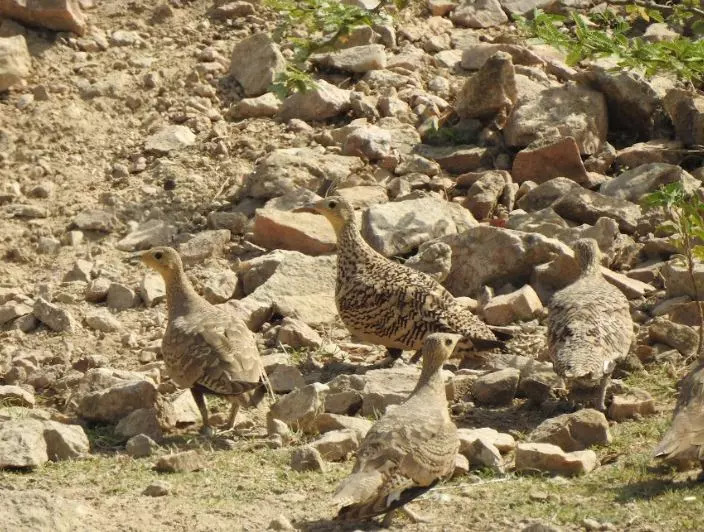
Chestnut-Bellied Sandgrouse – Like an alarm clock, these sandgrouse appear as if by magic even beside small puddles in the early afternoon and evening to drink water before disappearing again. This species showcases the importance of even tiny wet patches for biodiversity in urban areas. Photo courtesy: Kanishka Mehta Via: KS Gopi Sundar
As informed by Dr. Gopi Sundar, such studies provide an alternative vision for India though, seeing cities also as preservers of biodiversity. Thanks to its lakes, trees and the Aravallis which citizens maintain, Udaipur can be proud of its birdlife. This varies from the tiny plain prinia to the rare white-bellied minivet and whitenaped tit, earlier thought to not be urban at all. Over 2.5 lakh house sparrows were also found here — which is heartening for a species thought to be collapsing in urban areas. Large birds were found too, like ibises, cranes, woolly-necked storks and Egyptian vultures, which were thought to be declining in forests, yet were seen breeding in Udaipur.
References –
https://www.ncf-india.org/author/646467/k-s-gopi-sundar
https://www.iucn.org/our-union/commissions/group/iucn-ssc-stork-ibis-and-spoonbill-specialist-group
Discover more from rasayANix
Subscribe to get the latest posts sent to your email.
 rasayANix