Summary : ‘ South Africa’s national parks protect wildlife and ecosystems — they face the pressures of land and inequality ’. This is a detailed summary of the discussion with Times Evoke.
Jane Carruthers is emeritus professor of environmental history at the University of South Africa. Speaking to Times Evoke, she outlines the roots and development of South Africa’s protected parks.
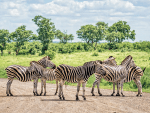
Our first park was made in the colony of Natal in the 1890s, there being four British colonies in South Africa then.Natal had a majestic mountain range called the Drakensberg, which has waterfalls and stunning views and resembled Yellowstone. At the time, it was recognised that South Africa’s savanna was seeing the disappearance of wildlife because of increased hunting and population pressure, coming also from opening the country up to white settlement. Land was being increasingly allocated to settlers and farms, further pressuring wildlife. Recognising this, their aim was to protect animals for hunting, just as in many places in India. These came up in three colonies, mostly located in places settlers were not keen on because these had endemic diseases like malaria, horse sickness and so on. In 1896, rinderpest had decimated wildlife and domestic stock. So, in the early 1900s, the idea of making protected
areas caught on in South Africa, driven by the need to conserve diminishing herds.
In the mid-1920s, James Stevenson Hamilton, a game ranger in the Sabi Reserve in Mpumalanga, started an initiative to make the Reserve a National Park. So, a long campaign was led by Hamilton and some allies who managed to get this through Parliament, culminating in the establishment of the Kruger National Park Kruger was our first park which really spoke to the national psyche. It had a board to manage
it but no bureaucratic structure and not much public involvement as it was remote
and few people could get there. So, Kruger’s game rangers, mostly white men with African staff, mainly stopped poaching and allowed herds to multiply. Parks were created in marine areas, desert zones, etc., aiming to protect something of each biome. The bureaucracy of these also grew. And in the 1970s, with the evolution of conservation science, a scientific attitude came to prevail.
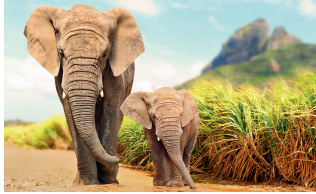
But gradually, species and ecosystems in South Africa began to benefit. Not many people want to go and look at arid parts of the Karoo, for instance. There are no lions or other big animals there. But those landscapes really benefitted from preservation as have marine ecosystems in the country. Elephants have also gained — there are close to
half a million elephants in southern Africa and often, there are concerns about anaging
these numbers. Rhinos, once on the brink of extinction, returned.
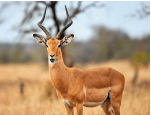
Little creatures also got a breather in such parks — pangolin and aardwolf, ant eating wolves of the Karoo, are examples. When Kruger began, it was far away and full of disease. Africans there didn’t use it much. They planted crops in the summer and moved out, returning in winter. There was also opposition from mining companies and
other business interests as South Africa industrialised. This has been handled in various ways. In Kruger, a formal title to the land was returned to the evicted community, the Makuleke in the north. These groups remain within the park, helping with conservation work and also benefit from money coming via tourism etc. Of course these are not rich agricultural areas with productive soil that’s good for profitable
farming. SANParks has got some accolades but some criticism too about fending off potential land invasions. Yet, national parks are economic drivers for South Africa. Millions go to see the Table Mountain and then head to a national park. Ecotourism contributes billions of rands to South Africa’s GDP — before the pandemic, it generated about 7%, returning to 3% of GDP now. South Africa is a signatory to the Convention on Biological Diversity — it is committed to protecting these ‘witness areas’, which hold much of Earth’s history and where a future which includes climate change can be monitored.
Source : https://timesofindia.indiatimes.com/times-evoke/photo/104051527.cms?_gl=11237mxp_gaMTU0OTMxOTgwNy4xNjk1Mjk0MjIw_ga_FCN624MN68*MTY5NjMxMDM5OC4zLjAuMTY5NjMxMDM5OC42MC4wLjA.#_ga=2.49478246.1959566426.1696310398-1549319807.1695294220
Discover more from rasayANix
Subscribe to get the latest posts sent to your email.
 rasayANix